In the modern food industry, quality control is not just a requirement—it is a responsibility. Rice manufacturers play a critical role in ensuring that consumers receive safe, nutritious, and premium-quality products. At Maa Annapurna Modern Rice Mill, quality control forms the foundation of every operation.
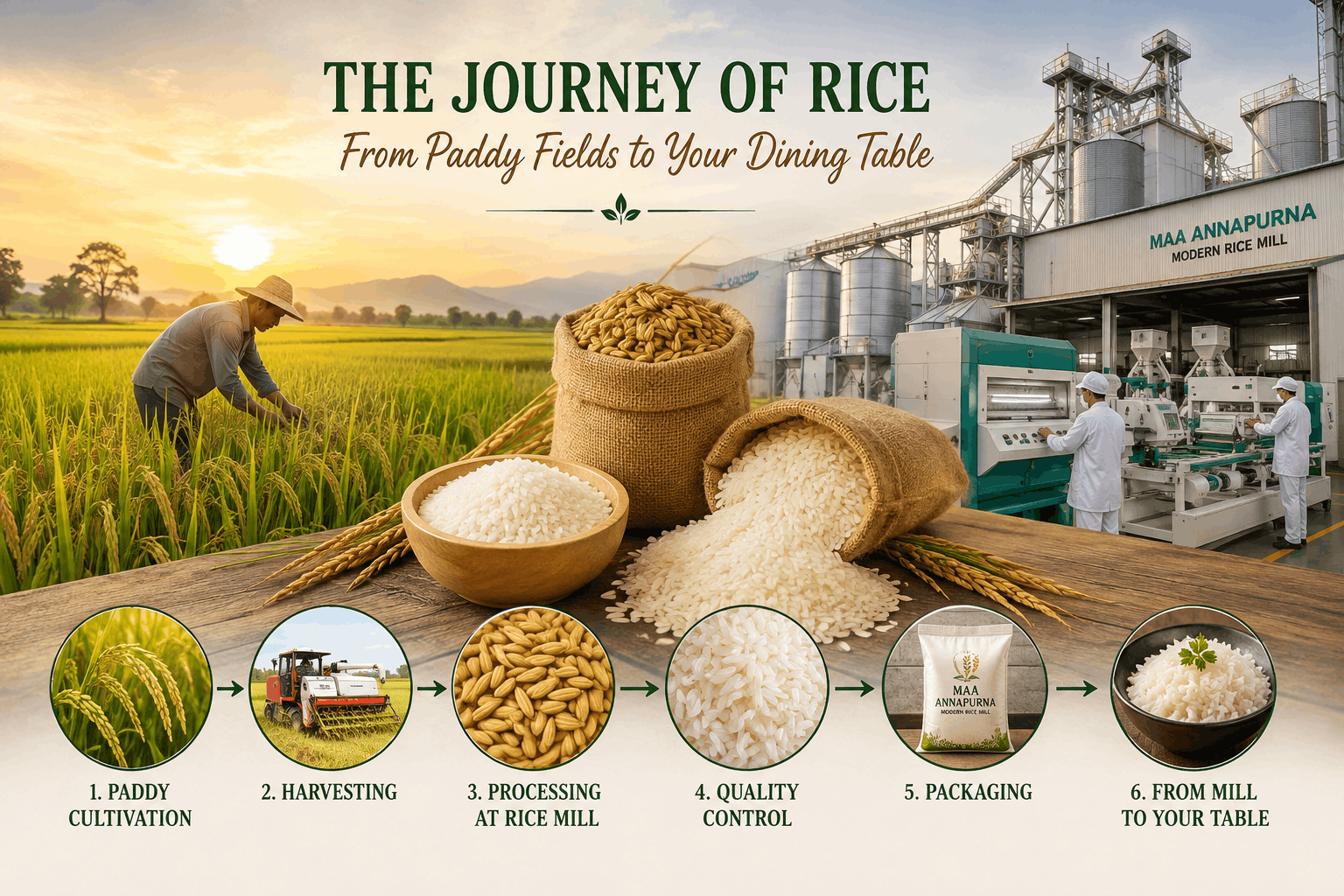
Rice quality begins long before the milling process. It starts with sourcing high-quality paddy from reliable agricultural regions. Selecting the right raw material ensures better grain consistency, appearance, aroma, and cooking performance.
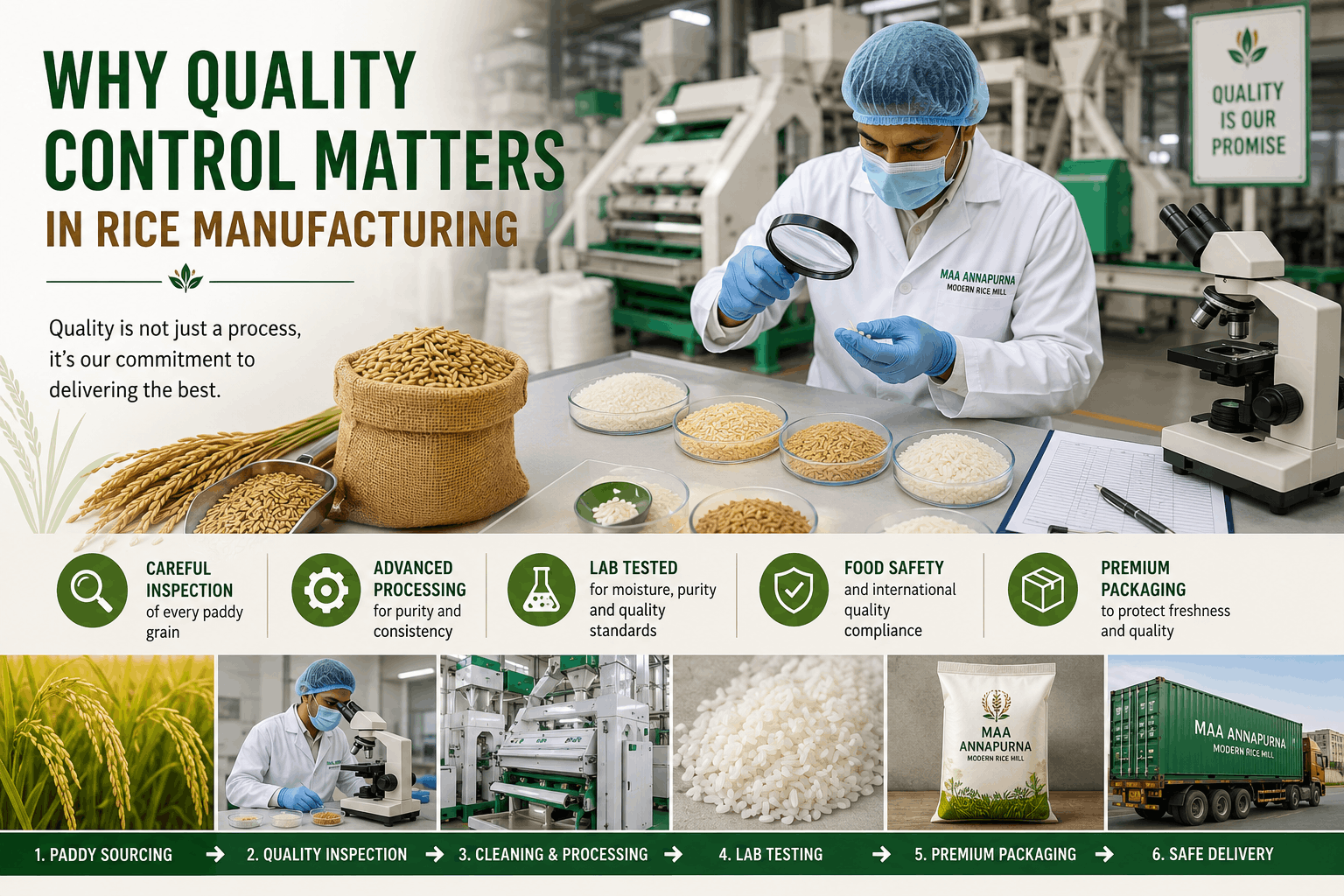
The first stage of quality control involves careful inspection of incoming paddy. Moisture levels, grain size, maturity, and purity are evaluated before processing begins. Any substandard material is identified and separated to maintain production standards.
During processing, advanced machinery helps remove impurities such as stones, dust, husks, and damaged grains. Modern equipment ensures precision while minimizing grain breakage. Continuous monitoring during milling allows manufacturers to maintain consistency and improve efficiency.
One of the most important aspects of quality control is moisture management. Excess moisture can lead to spoilage, mold growth, and reduced shelf life. Proper drying techniques help maintain grain quality while preserving nutritional value.
Laboratory testing further strengthens quality assurance. Samples are regularly tested for purity, moisture content, grain dimensions, and other critical parameters. These tests ensure compliance with food safety regulations and customer specifications. Many successful rice exporters rely heavily on laboratory verification to maintain international standards.
Packaging quality is equally important. Strong and durable packaging protects rice during storage and transportation. Proper sealing prevents contamination and helps maintain freshness for extended periods.
For exporters, quality control becomes even more essential. International buyers demand consistency, safety, and reliability. Even minor variations in grain quality can impact customer satisfaction and business relationships. Therefore, manufacturers must implement strict inspection procedures at every stage.
Consumers also benefit directly from effective quality control systems. High-quality rice cooks evenly, offers better taste, and provides a superior dining experience. Consistent quality builds trust and encourages repeat purchases.
In today’s competitive market, quality control is a key differentiator. Companies that invest in advanced technology, skilled professionals, and rigorous testing procedures are better positioned to meet customer expectations and achieve long-term success.
At Maa Annapurna Modern Rice Mill, quality is more than a process—it is a commitment. By maintaining strict standards from sourcing to packaging, we ensure that every grain reflects our dedication to excellence.